Part of the Journey
Originally published in the Summer 2026 issue of Seed Culture — read the full journal here
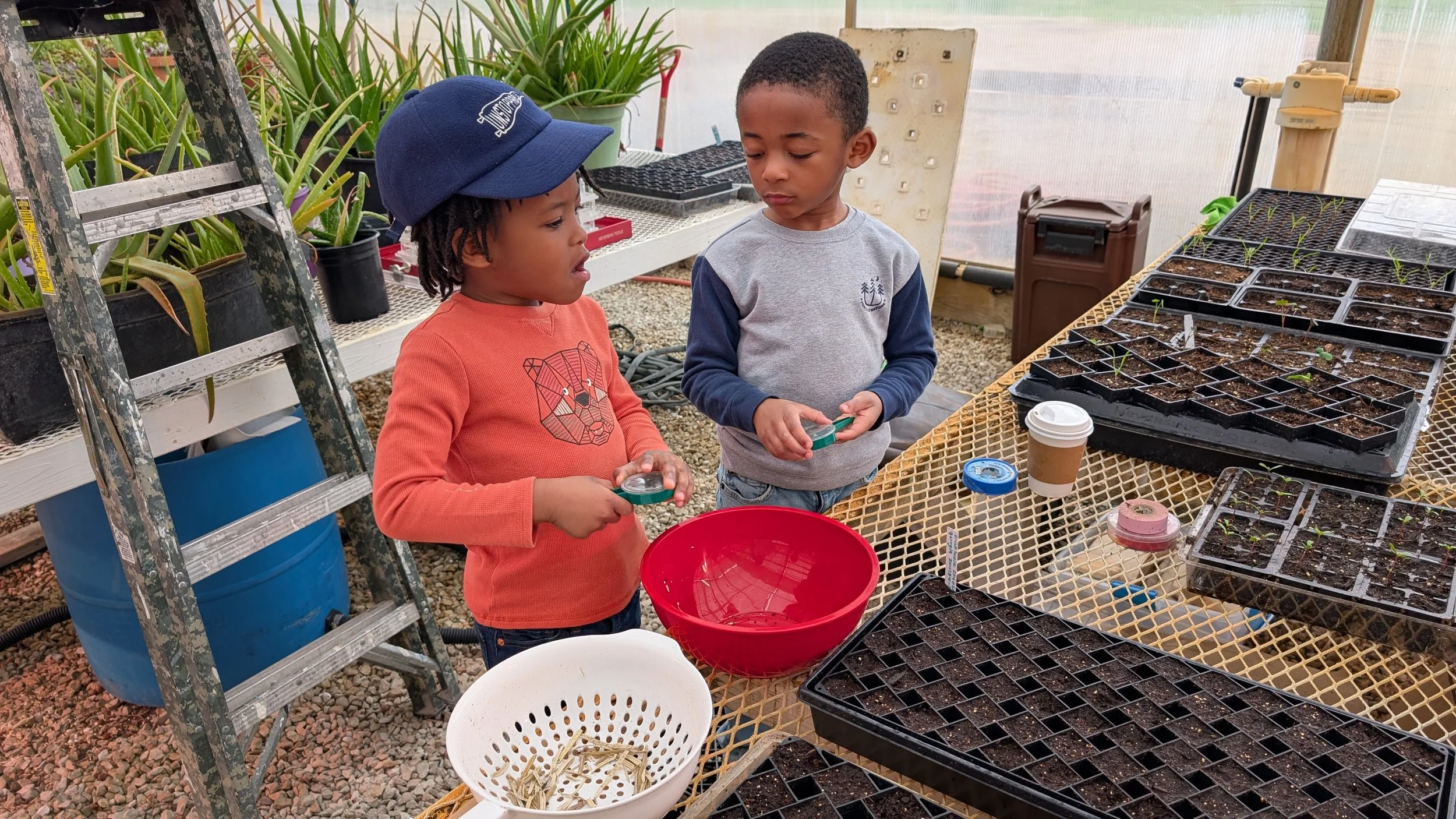
-Ben and his friend Khari helping to count and plant collard seeds-
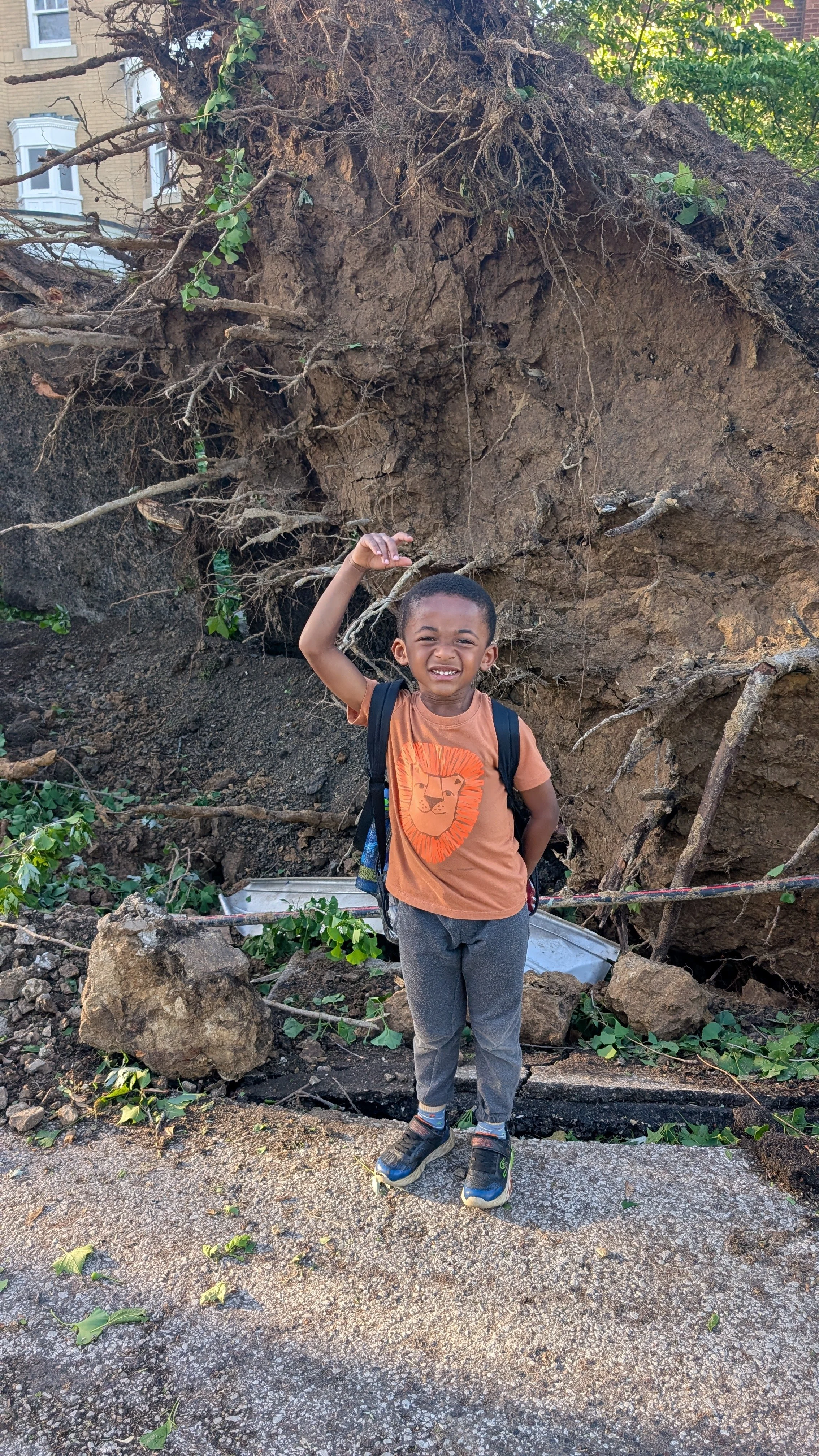
I can still hear my grandmother’s voice when I told her I wanted to study agriculture. “You mean like farming!?” she cringed with a laugh. “We tried that before, Baby, are you sure you don’t want to be a doctor or an engineer?” She grew up sharecropping with her grandfather in the late 1940s, and I’m sure she assumed our family’s days out in the field were over. Ironically, sixteen years after that conversation, I was standing with my son in front of a vacant lot in East St. Louis, preparing to plant my first collard green field trial. As a plant scientist, I was gathering data for my dissertation. As a first-year seed steward, I was learning the art and culture of seed saving. As a father, I was realizing that my five-year-old was not just going to play quietly on his iPad while I worked. He was determined to become part of the journey. While I meticulously analyzed the rows for spacing, uniformity, and traits to improve plant performance... this child was full-on frolicking. He found dandelions to disperse into my nice, neat rows. He stepped on leaves chasing cabbage moths. He dug holes for the frogs hopping along the edge of the field. At some point, the gentle serenade of grasshoppers in the summer heat fell silent beneath the deafening chorus of “Daddy, look!” “Daddy, come here!” “Daddy, what’s this?” and “Oooh Daddy, did you see this?” As far as I was concerned, I was just there to measure plants and get this data. Dassit! Or so I thought. If I’m being honest watching my son move through the field like that inevitably changed the way I understood “the work”. In real time, I was learning how messy fathering through a PhD could be, how much patience it required, how much flexibility it demanded, and how much grace it needed for the things I could not control. That day, somewhere between the unruly field and my son, I began learning two important lessons about fatherhood that I try to lean into more and more each day:
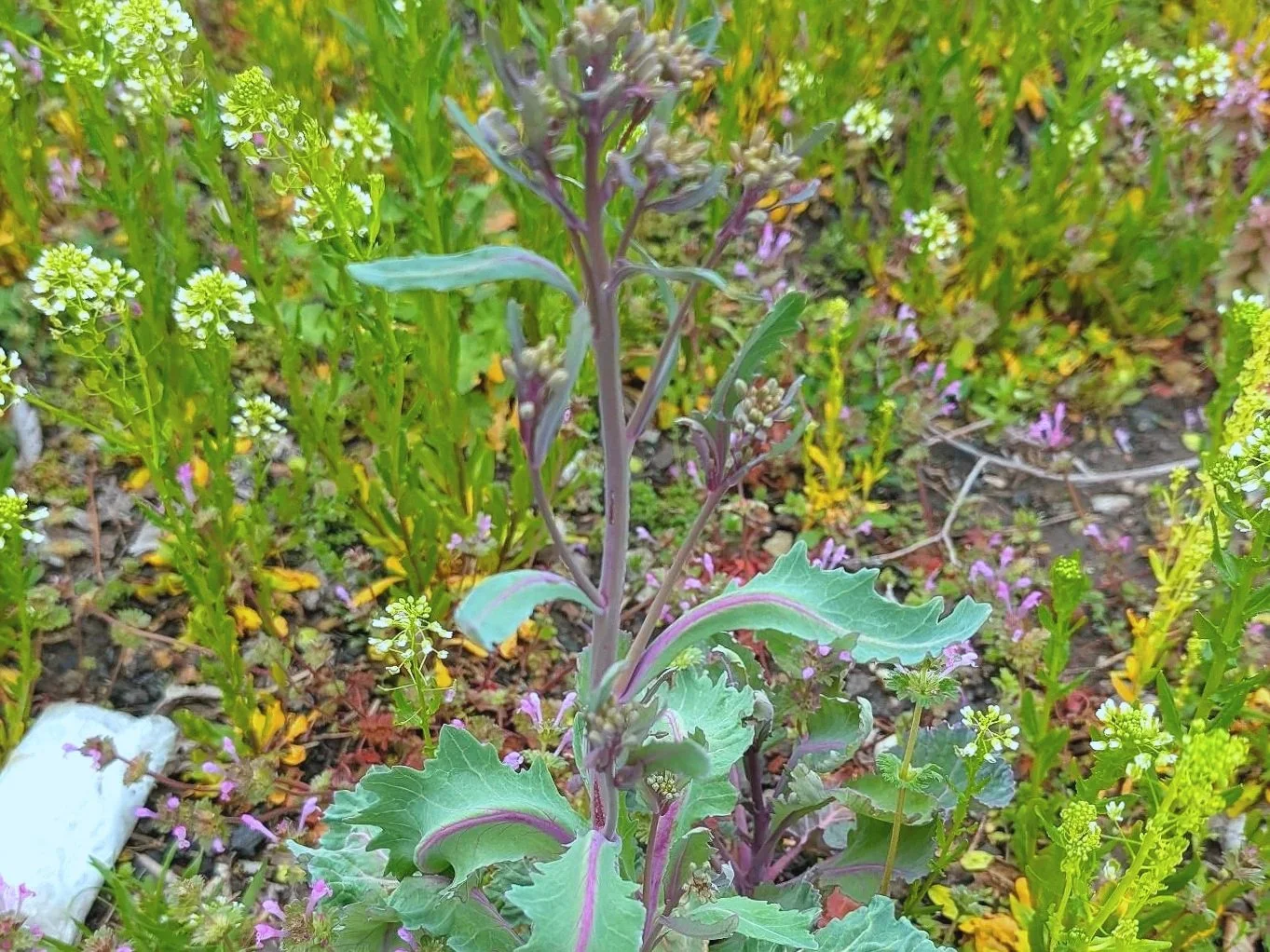
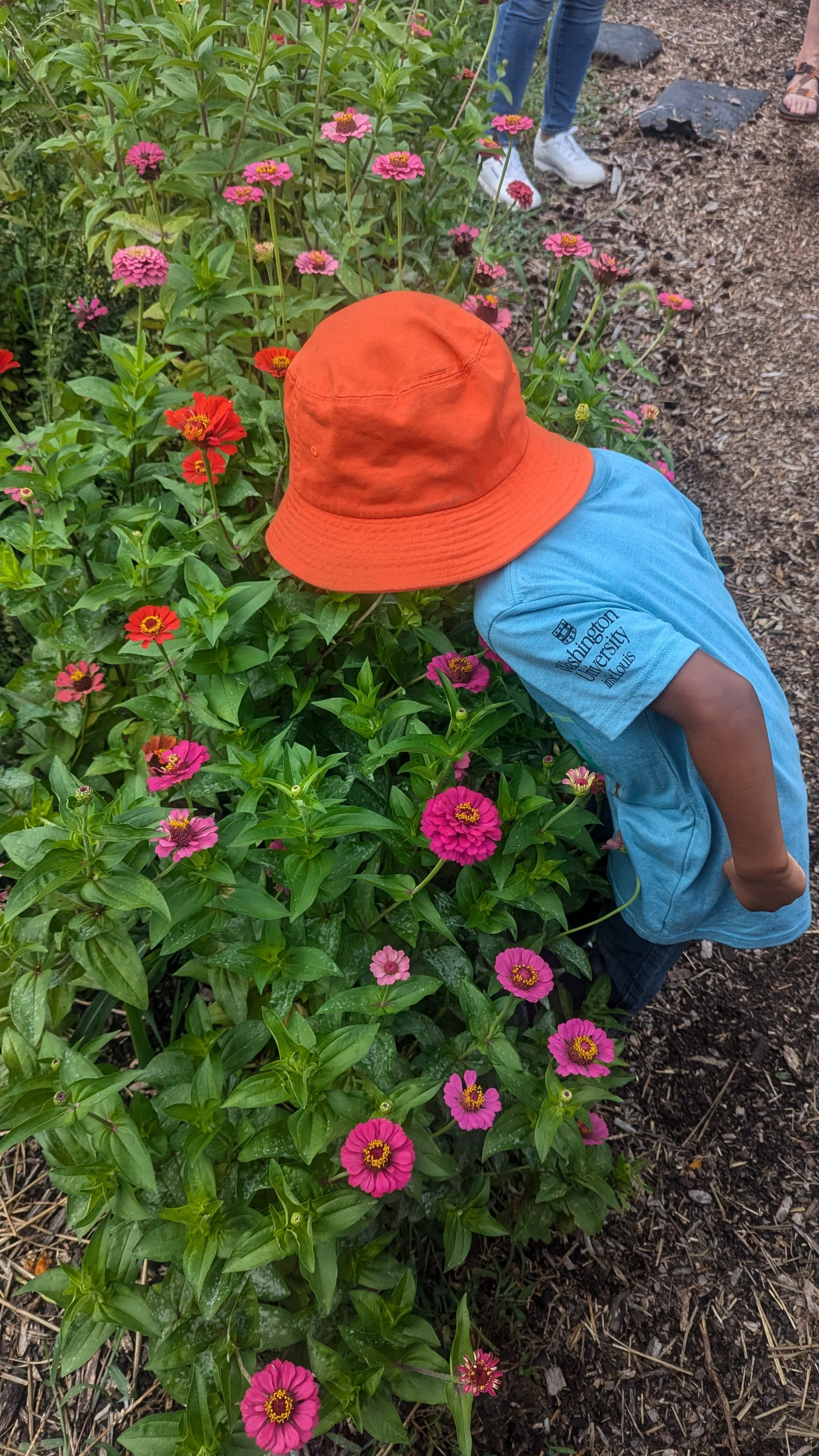
Lesson 1: I am learning to be thankful for the flowers…even the ones I didn’t plant.
- purple collards out in the field -
Nestled behind a small, unsuspecting blue brick building, I was trying to transform a vacant lot into a living site of scientific exploration. My plots were designed as textbook studies in precision: geometrically symmetrical rows where every plant was spaced exactly 18 inches from center, drip-irrigated at a steady flow rate twice daily, and kept clean and free, by hook or by crook, of anything that even looked like it could be a weed. Then, a few weeks later, the field started talking back. Suddenly, my carefully manicured collards were lost in a wildfire of asters, wild bergamot, sedges, and other plants I had never intended to grow. My first instinct was that they had to go. But the bees and butterflies told a different story. Those flowers may have looked out of place, but they were helping create a community that supported the collards in ways my careful planning could not. They brought in bees and butterflies, deterred pests away from my greens, and created a more balanced ecosystem than my clean rows ever could. Fatherhood has been teaching me that same lesson. As my son grows, I am learning that he will be shaped by more than the conditions I create for him. He is navigating two homes, different rhythms, new friendships, questions, disappointments, joys, and experiences I cannot control, and all of it is becoming part of the ecosystem around him. Some of it makes me proud, some of it makes me nervous, and all of it reminds me that love is an act of surrender, not control. Truth is, our life does not look exactly like what I originally hoped it would, but I am learning that a field is not failed just because something unexpected blooms. The weeds will come. Some will flower. And they, too, will be beautiful. My work is not to pull up everything I did not plant, but to pay attention to what is helping us become more rooted, resilient, and whole.
Lesson 2: I am learning that this work was never meant to be mine alone.
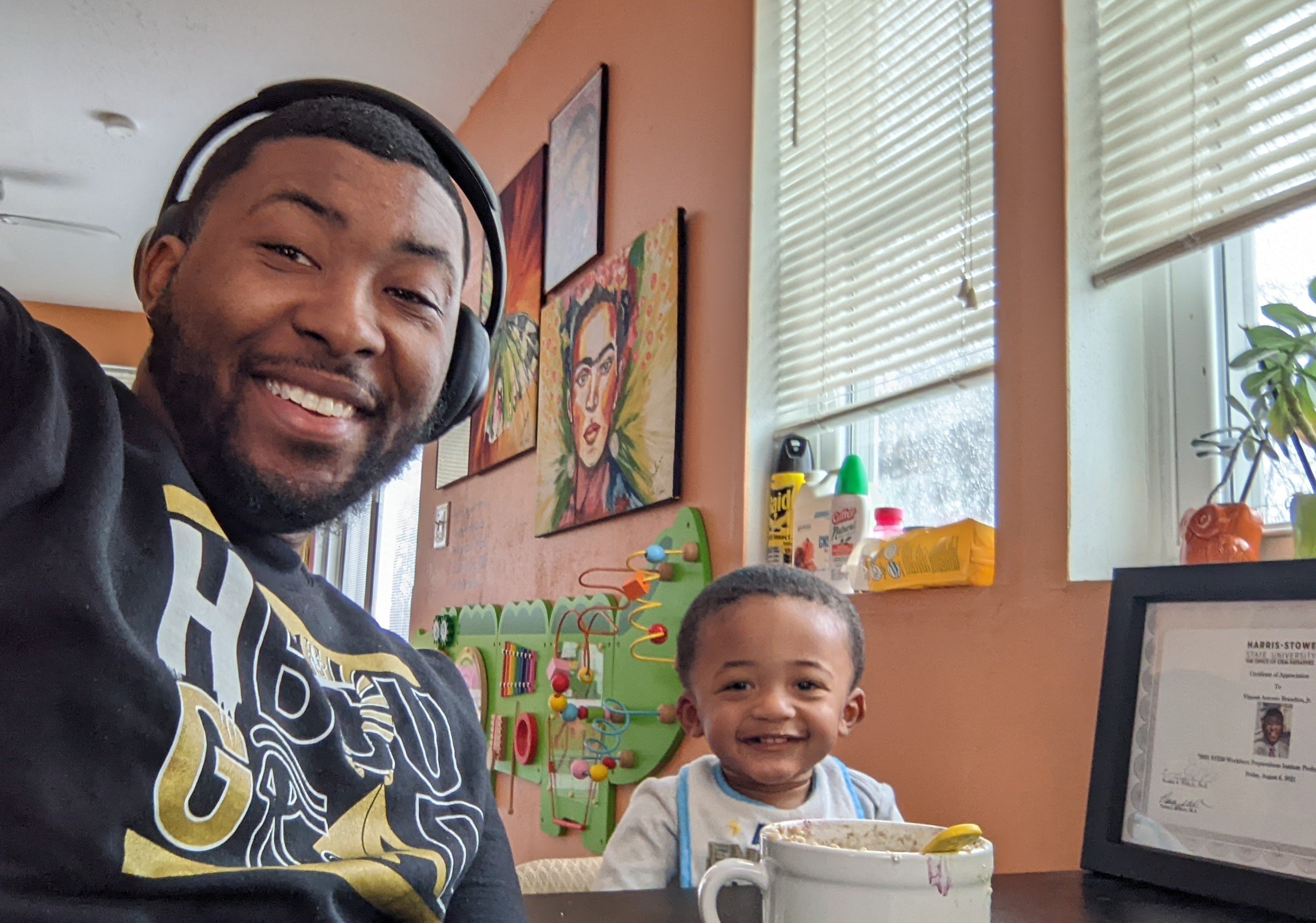
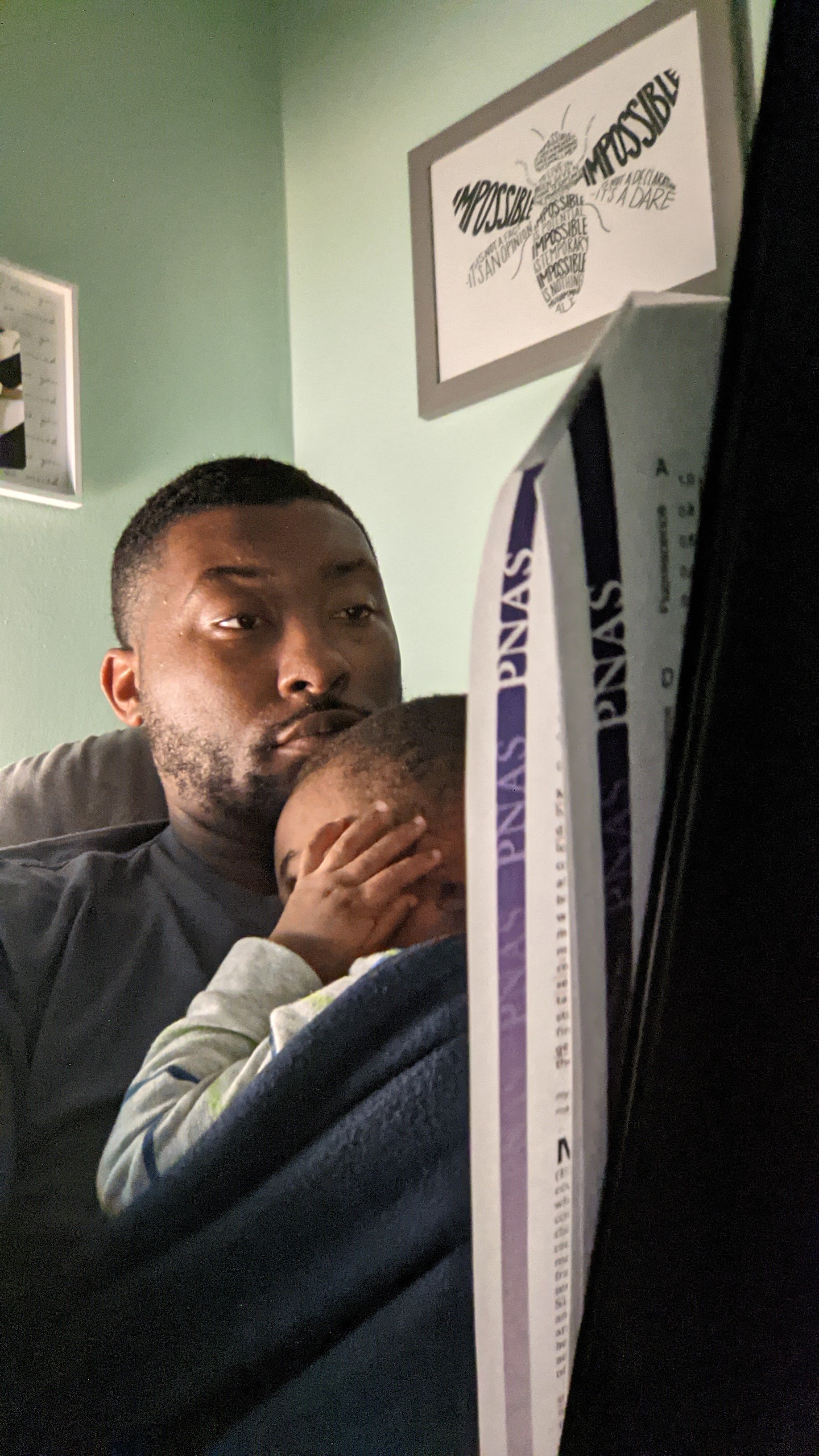
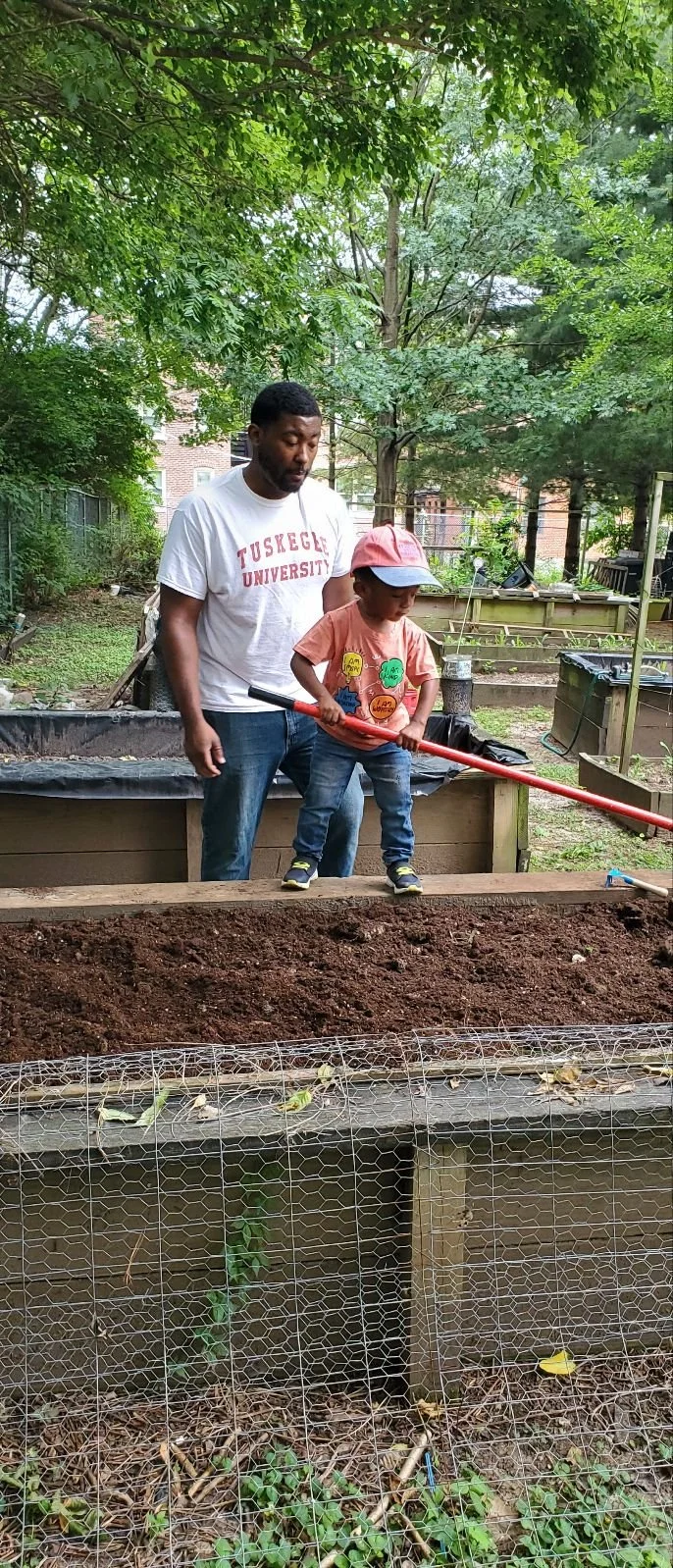
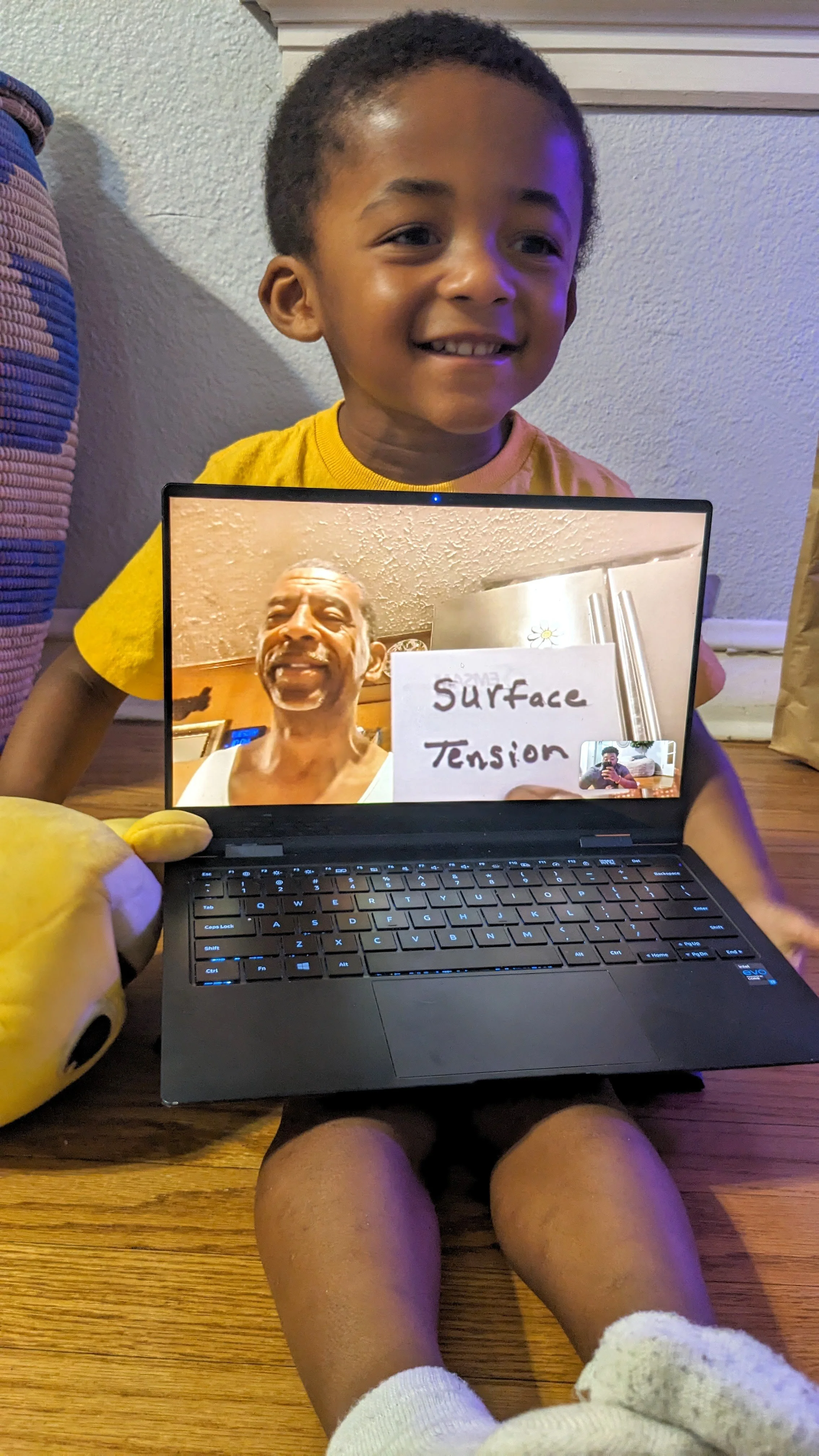
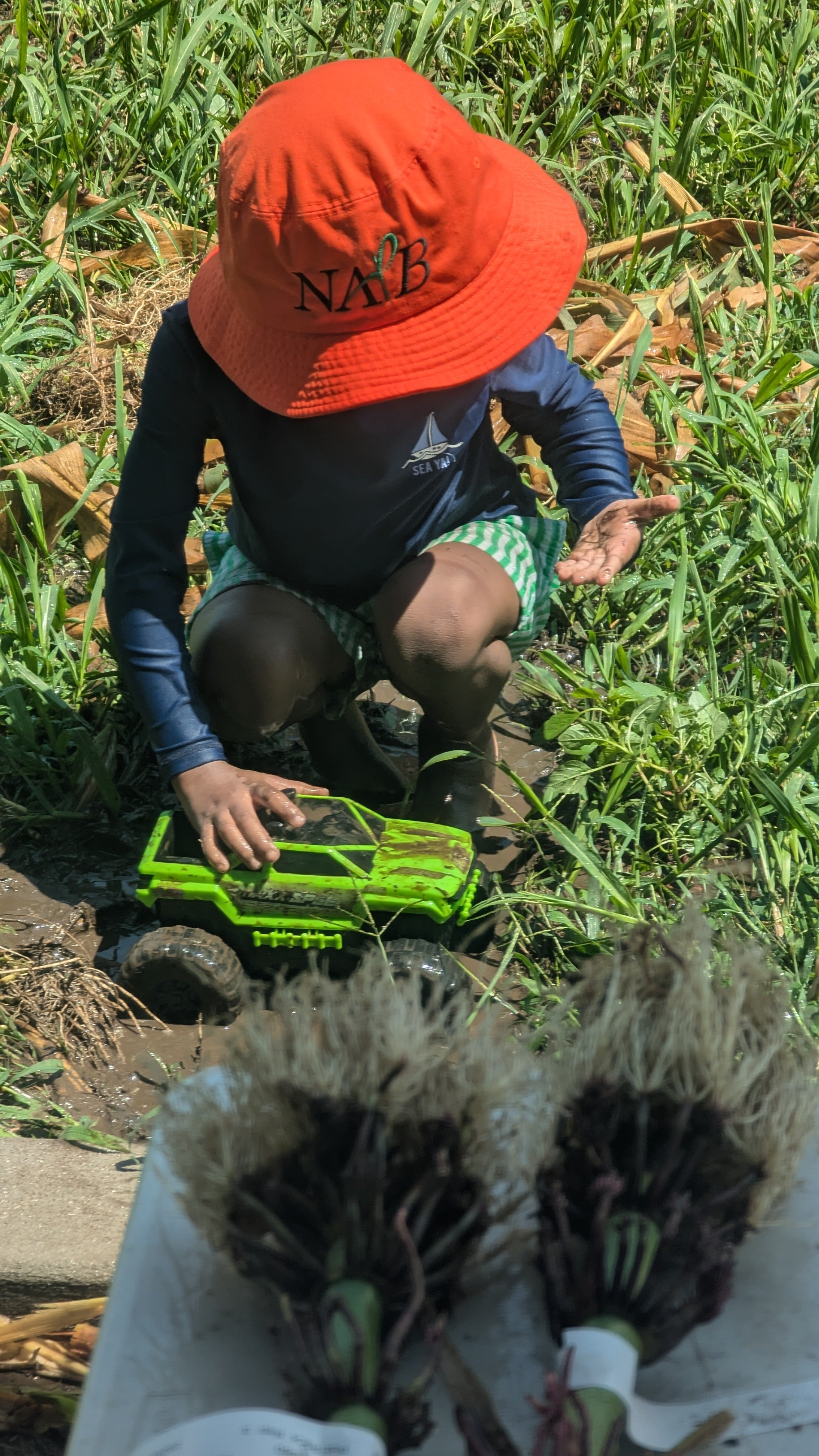
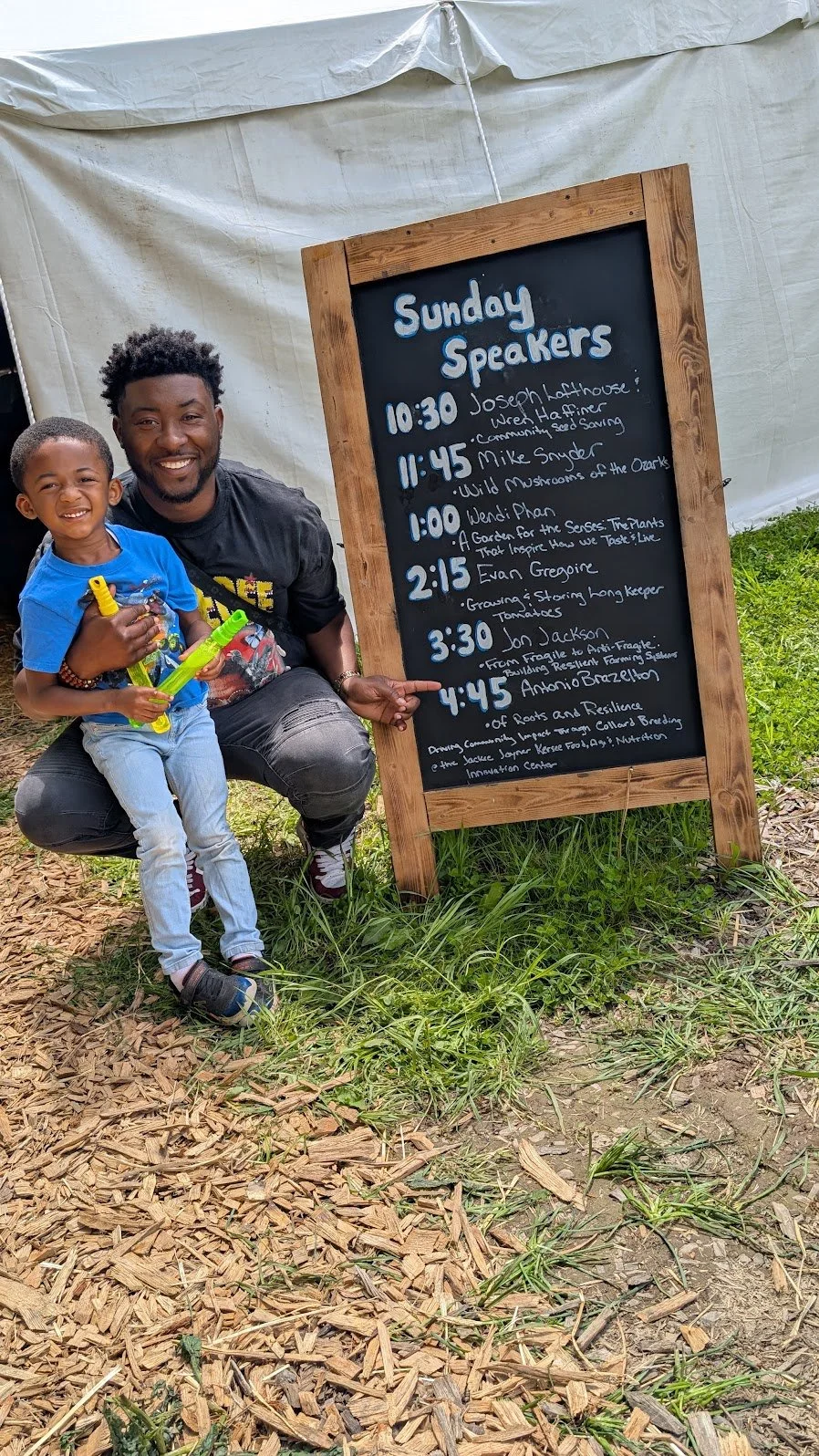
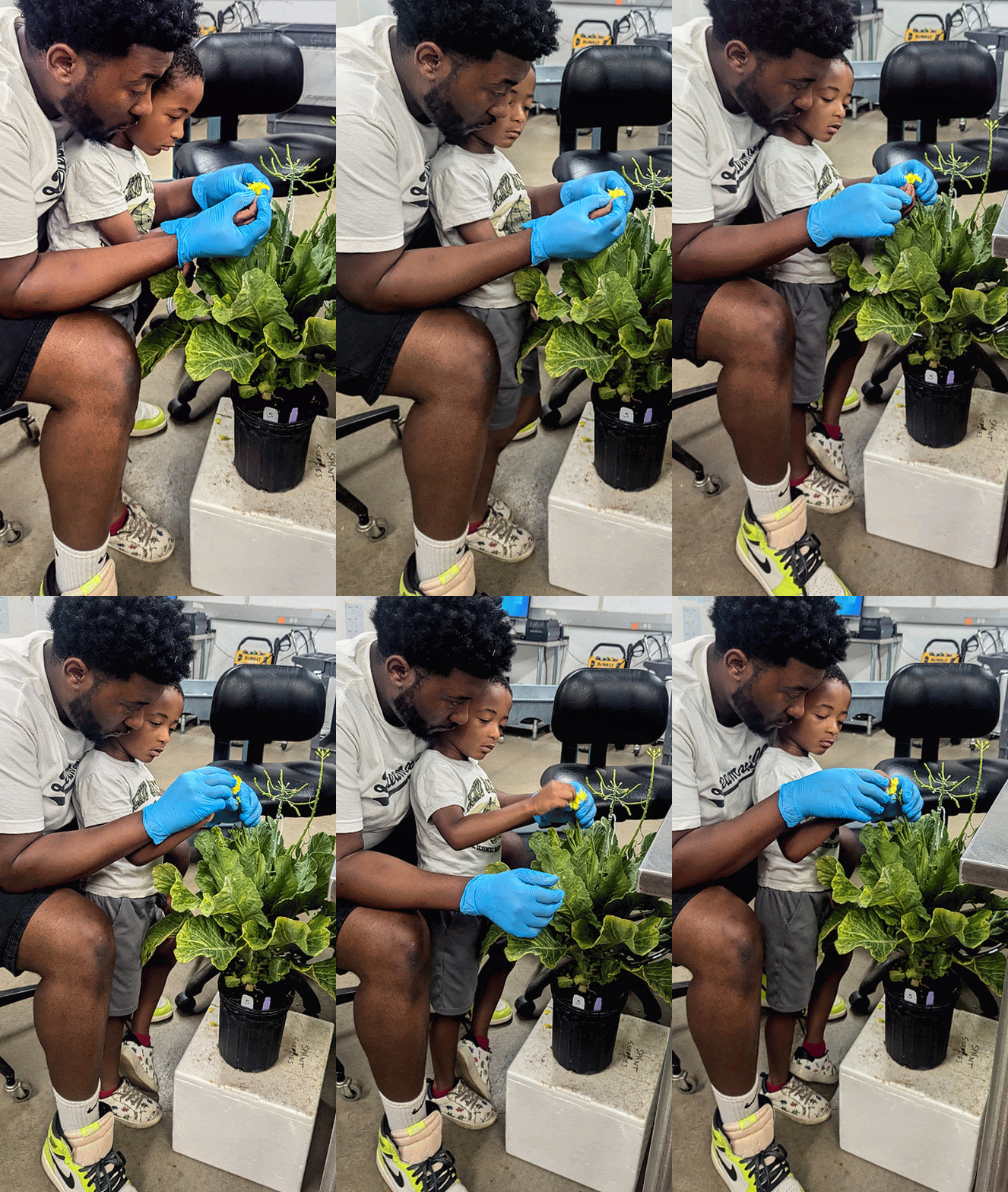
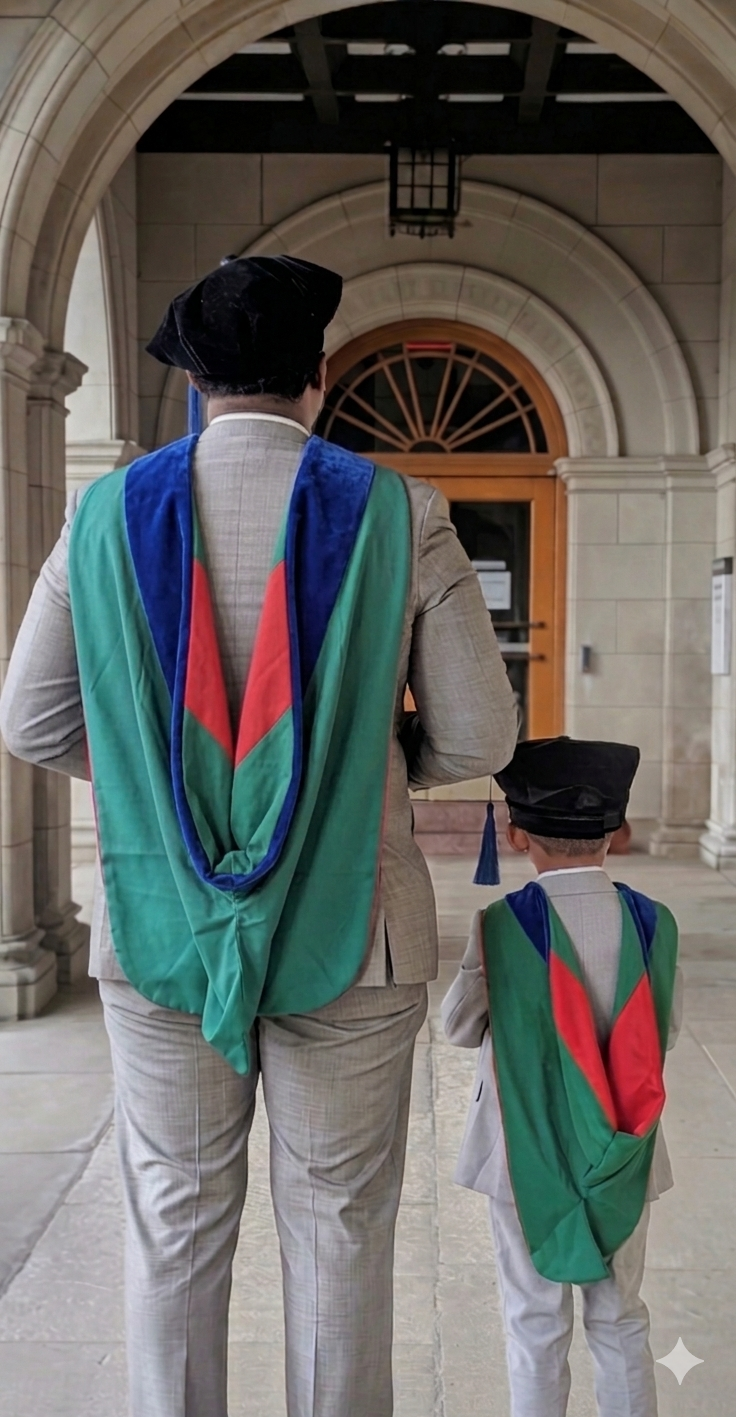
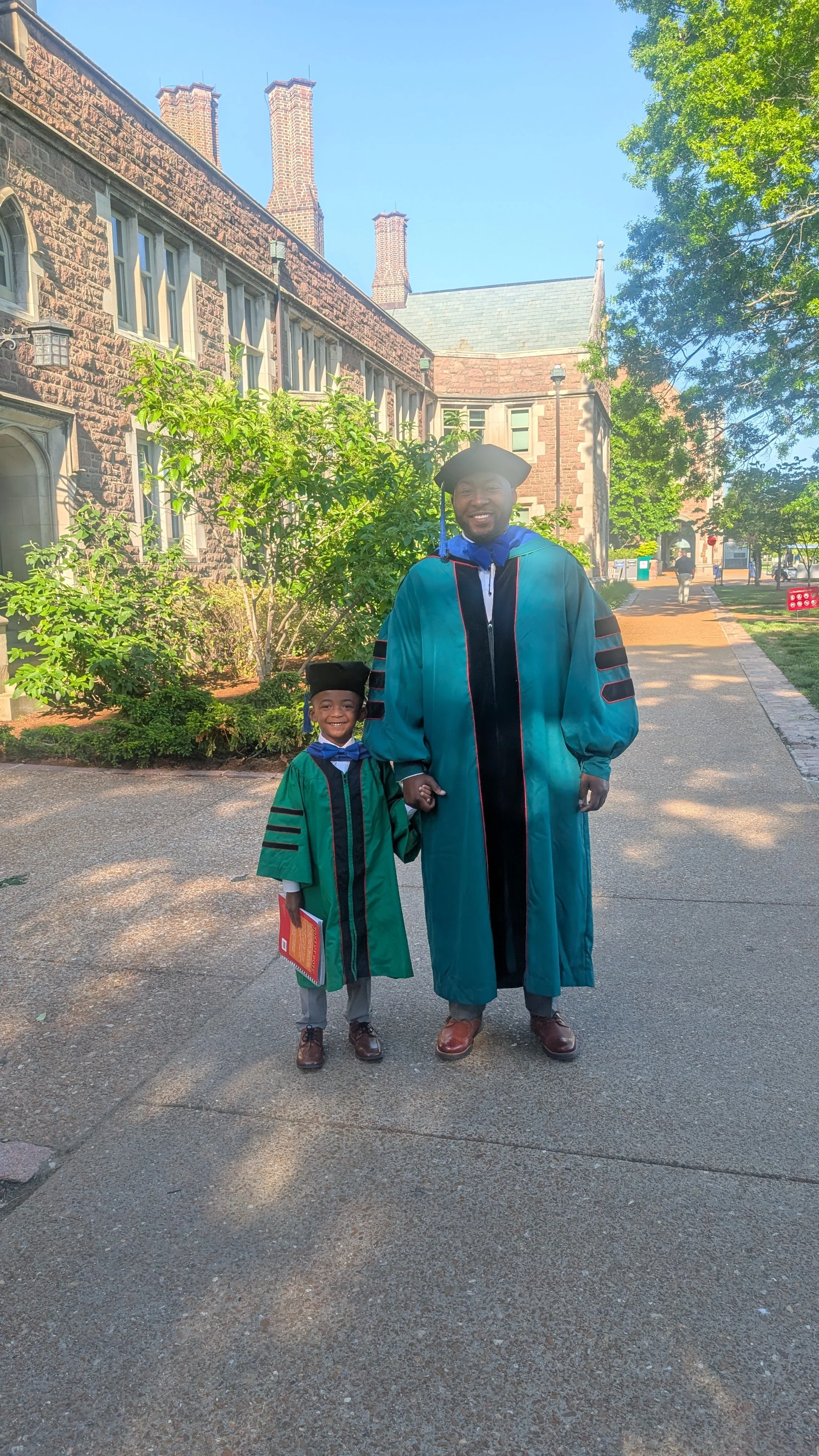
- My favorite field assistant, research partner, and reason to keep growing -
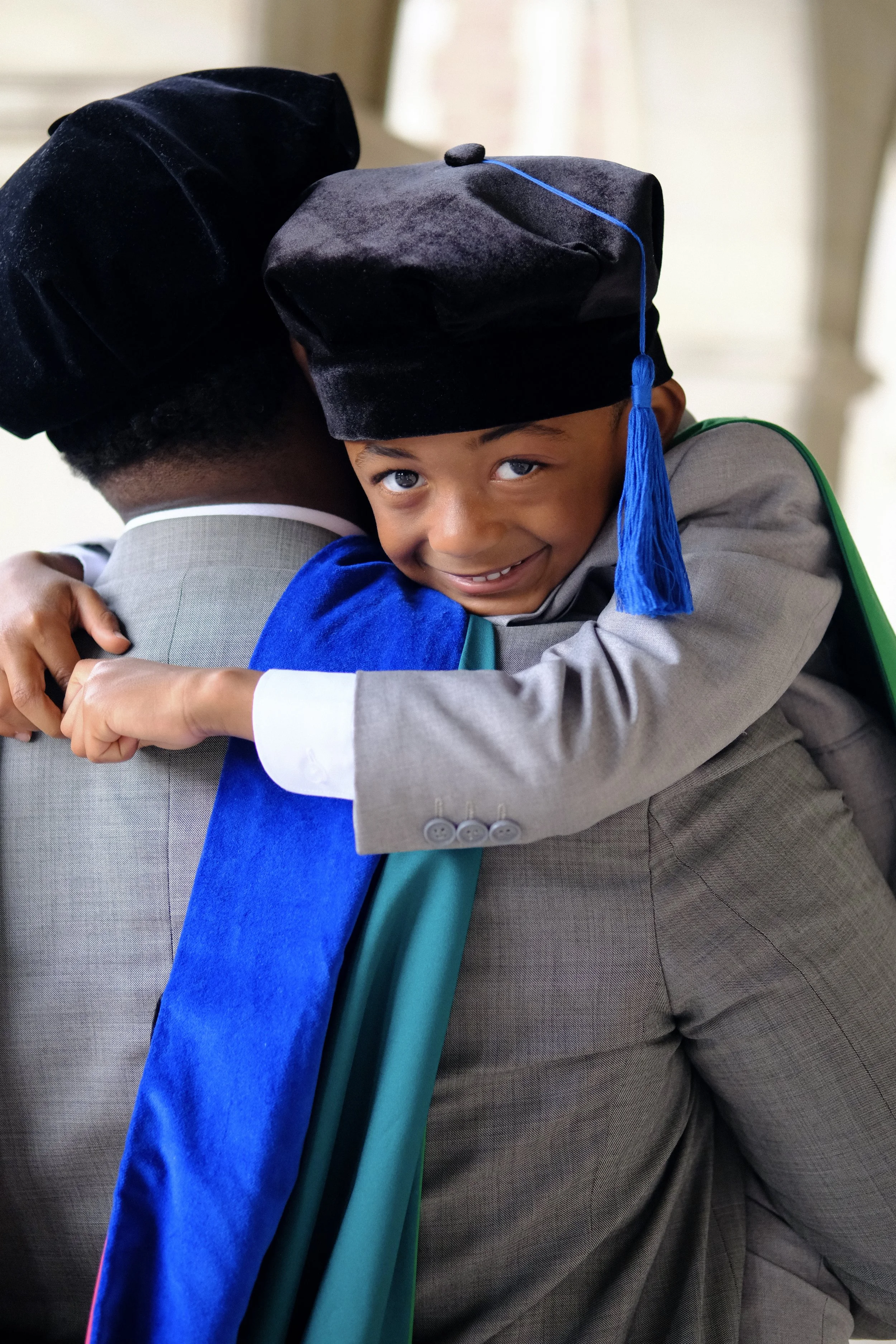
From the time I began interviewing for graduate school, my son was there. I started my PhD program 16 months after he was born, and to this day I still ask, “Why would my friends let me start a PhD program as a new dad?” But by then, it was too late. I was already up reading research papers during midnight feedings, holding a bottle in one hand and plant science articles in the other. To get him up to speed, I even bought him an ABC book of biology. No surprise there: “P” was for photosynthesis. The PhD had already become something we were moving through together. He was no stranger to the messiness of field seasons, greenhouse visits, conference deadlines, root washes, and the quiet routines we built around the work. His presence forced me to slow down and be more intentional about the ways I included him. Some moments, I had to choose between writing one more chapter and getting down on the floor to play. Other times, I had to choose between analyzing one more dataset or finishing a bedtime story, knowing I still had dishes waiting in the sink. Some nights I chose the work, some nights I chose him, and most nights I wondered whether I had given enough to either. One hot Saturday morning, the pool was closed. So, we threw on his swim trunks and let him join our lab as we used a hose to rinse soil from collard roots. He had no clue it was research. To him, it was just a muddy field for his monster trucks to slosh around in. And honestly, he probably had the most fun of all of us that day. That lesson followed me into seed stewardship. Including Ben never felt like an interruption of the work; it just became part of the work. Saving seed was teaching me to slow down, make room for others, and trust that the work deepens when more hands, more stories, and more hearts are allowed to touch it. In East St. Louis, this meant making room for high school students, farmers, teachers, grandmothers, fathers, neighbors, and even the occasional hungry raccoon. On May 20, 2026, we got to commemorate the last five years by walking across the stage together during the hooding ceremony at Washington University in St. Louis. It was not just me crossing a stage. It was us carrying the work together, in public, after years of doing it quietly. I thought about my grandmother in that moment. Her question all those years ago was never meant to be mockery; it was memory. It carried the weight of what agriculture had demanded from her, from our family, and from so many people who looked like us. But standing there with my son, I also understood that I was not simply returning to agriculture. I was learning how to return with choice, with care, and with the next generation. What she knew as survival, I was learning to study, steward, and share. But more than anything, I was learning that the work of seed stewardship, much like fatherhood, is the work of tending what you love without needing to own every part of what it is becoming. Not by controlling every row, every flower, or every outcome, but by making room for life to grow in ways that you may never fully predict.
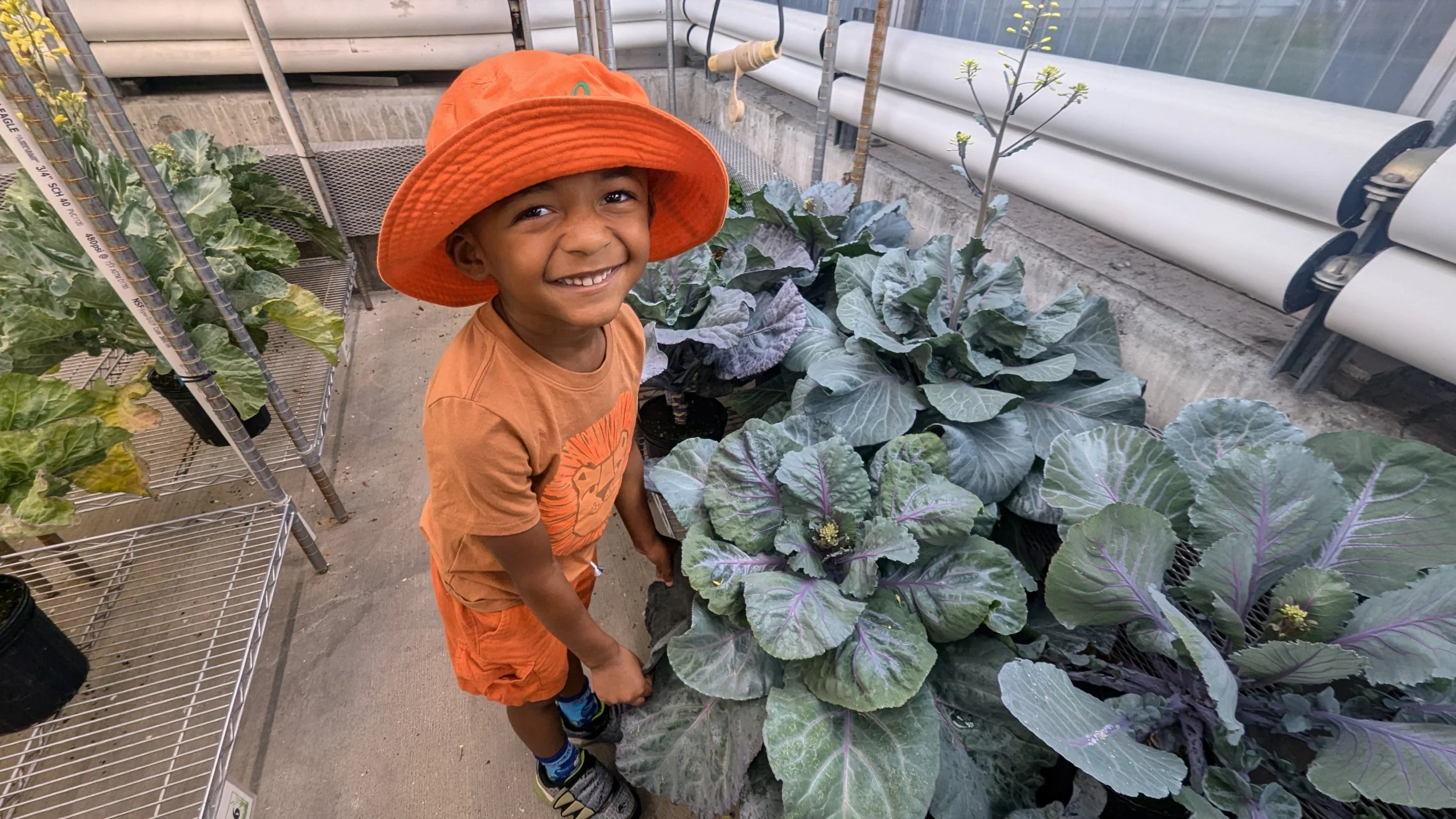
breeding collards in the greenhouse